Common Mistakes People Make When Trying to Move a Pool Table Themselves
In New York City, moving anything large can be a test of patience and strength. Apartments are small, hallways are narrow, and elevators can barely fit a sofa, let alone a full-sized pool table. Yet many people still try to move their pool tables on their own, thinking it will save time or money.
The truth is that pool tables are among the most difficult and delicate items to move. They require more than muscle. They demand precision, the right tools, and a full understanding of how every part connects. Without professional knowledge, a simple mistake can cause hundreds or even thousands of dollars in damage — and in some cases, damage that can’t be fully undone.
This comprehensive guide explains the most common mistakes people make when trying to move a pool table themselves and why calling experienced NYC movers is always the smarter choice.
Why People Attempt DIY Pool Table Moves
At first, moving a pool table might not seem complicated. To many, it looks like a heavy piece of furniture that can be lifted with enough help. The problem is that most people underestimate three key factors: weight, structure, and fragility.
A typical pool table weighs between 700 and 1,000 pounds. It is made of multiple materials — slate, wood, felt, and rubber — all of which react differently to pressure, impact, and temperature changes. If any part is stressed, cracked, or warped, the entire playing surface can become unbalanced, and the table may never play the same again.
Still, people attempt DIY moves because:
- They want to save money.
- They think it is just another heavy item.
- They have friends who can help lift it.
- They are unaware that pool tables must be disassembled before moving.
Unfortunately, good intentions rarely make up for lack of experience. Once the felt rips, the frame twists, or the slate cracks, saving money becomes impossible — and the cost of “fixing” a DIY move can quickly exceed the price of hiring professionals from the start.
The Most Common Mistakes People Make When Moving a Pool Table Themselves
Below are the most frequent errors DIY movers make and why they cause so much trouble, especially in tight NYC apartments and walk-up buildings.
Moving the Table in One Piece
This is by far the most damaging mistake DIY movers make. Pool tables are not built to be lifted as a single unit. The slate, legs, and frame are joined in a way that distributes weight evenly when the table is stationary. When lifted as one piece, that balance disappears and the structure is put under extreme stress.
What typically happens:
- The legs break or loosen under stress.
- The slate shifts, cracks, or separates at the seams.
- Bolts and joints warp, causing permanent misalignment.
- Felt tears as pressure is applied unevenly across the surface.
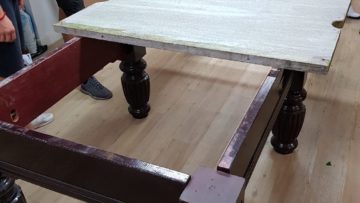
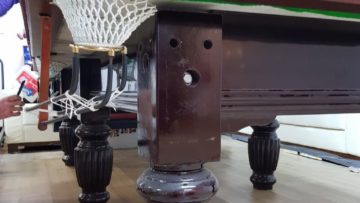
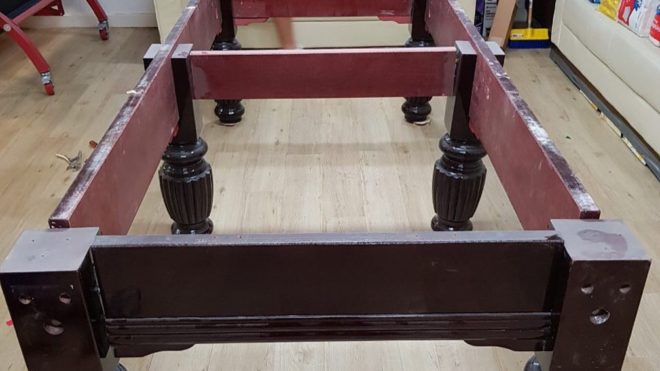
Professional movers never move a table intact. They disassemble it carefully, separating each component and labeling it for reassembly. This approach ensures that nothing is strained or damaged and that the table can be set up again perfectly level and structurally sound.
Using the Wrong Tools or Techniques
Pool tables have specialized construction that requires precision tools. Many DIY movers use standard household wrenches, screwdrivers, or even hammers, which can strip screws, scratch wood, or crack slate edges. Some even skip tools altogether and try to force pieces apart by hand.
Forcing parts can:
- Damage pockets and rails that are tightly fitted.
- Strip bolts and screws so they can’t be tightened properly later.
- Chip the slate or crush delicate wood edges.
Professional movers use:
- Socket wrenches and calibrated drills for proper torque.
- Staple removers and felt tools to lift cloth safely.
- Slate lifters, padded braces, and dollies to protect surfaces.
Every movement is controlled, ensuring that no part is bent, over-tightened, or scratched. Without these tools and techniques, even small errors can make the table difficult or impossible to reassemble correctly.
Skipping Labels and Organization During Disassembly
Disassembling a pool table involves removing dozens of parts, from screws and brackets to rails, pockets, and cushions. Without labeling, keeping track of what goes where becomes almost impossible.
DIY movers often pile everything into a single box or bag. When it’s time to put the table back together, they spend hours guessing where each bolt or bracket belongs — often getting it wrong or leaving out components entirely.
Professionals prevent this by:
- Labeling every piece during disassembly.
- Keeping hardware grouped and sealed in clearly labeled bags.
- Creating a system so every rail, cushion, and bolt returns to its exact position.
This organization is not just about convenience; it ensures the table is reassembled to its original specifications. Even one misplaced screw or bracket can throw off alignment, cause looseness, or introduce subtle rattles and vibrations.
Lifting Slate Without Assistance or Safety Gear
Each piece of slate can weigh 200 to 300 pounds, and it is extremely brittle. Unlike solid granite, slate can fracture under uneven pressure, corner impacts, or even from a short drop. DIY movers often underestimate this and try to lift it without straps, padding, or enough people.
Common outcomes:
- Slate chips along the edges or corners.
- The surface cracks under stress or impact.
- Movers injure their backs, shoulders, or hands — or drop the piece entirely.
Professionals use lifting straps, slate carriers, and thick protective blankets to handle the material safely. They lift using coordinated team movements to ensure even pressure and stable footing. This not only prevents damage to the slate but also significantly reduces the risk of personal injury.
Neglecting Felt and Cushion Protection
The felt on a pool table is extremely sensitive. It must remain tight, smooth, and clean for accurate play. Folding, rolling, or stretching it incorrectly can ruin its texture and appearance. Cushions must also retain their shape and compression to provide consistent bounce.
DIY movers often peel felt off quickly, fold it for convenience, or tug on it at the corners. This creates permanent creases, thin spots, or uneven tension. They may also handle cushions roughly, bending or compressing the delicate rubber that affects ball rebound.
What professionals do differently:
- They remove felt using tools and methods that prevent stretching and tearing.
- They roll the felt gently around a hard tube or core to avoid wrinkles and creases.
- They wrap cushions separately in padded covers to preserve their shape and elasticity.
Once felt or cushions are damaged, replacement can cost hundreds of dollars — and the table will not play correctly until they are replaced. Proper care during the move prevents that expense entirely.
Forgetting to Protect the Apartment
New York apartments are small, and moving anything large risks scratching floors, denting walls, or damaging door frames. DIY movers frequently forget to protect these areas, assuming careful lifting will be enough.
What usually happens:
- Hardwood floors get scuffed by dropped legs, tools, or dollies.
- Corners of walls chip as long rails or slate pieces are carried out.
- Paint gets scratched by slate edges or metal brackets.
Professional movers protect the space before touching the table. They lay floor runners, use non-slip protective mats, wrap corners, and install foam guards on walls and door frames. This preparation ensures both your apartment and your table stay in excellent condition throughout the move.
Ignoring Building and Access Rules
In New York, moving is not just about getting something from one place to another. Buildings often have strict rules, including move-in hours, elevator reservations, and insurance requirements. Some even limit the days of the week when large items can be moved.
DIY movers often ignore these until it’s too late. They arrive with the table only to find they cannot use the freight elevator, that moves are not allowed that day, or that building management demands a Certificate of Insurance before entry.
Professional movers handle all of this in advance. They:
- Coordinate with building managers about move dates and hours.
- Reserve freight elevators or loading docks when required.
- Provide Certificates of Insurance that meet building requirements.
Their experience prevents the last-minute chaos, rescheduling, and potential fines that DIY movers often face.
Not Measuring Doorways and Staircases
Many DIY movers forget to measure before they move. They disassemble the table only to find the slate or frame won’t fit through a hallway or stairwell. In NYC, where pre-war buildings have unusually small access points, this is a major oversight.
When forced to tilt or twist pieces through tight areas, slate can crack and wood can scrape against walls or ceilings.
Professionals avoid this entirely by:
- Measuring every access point — doors, hallways, staircases, and elevators — before the move.
- Planning exact paths through the building and identifying potential obstacles.
- Using temporary door removal, protective padding, or even window hoisting if needed.
Their preparation ensures that every piece moves safely without damage, detours, or last-minute surprises.
Poor Reassembly and Leveling
Even if the disassembly and transport go well, reassembling the table incorrectly can ruin its performance. A pool table must be leveled to within a fraction of an inch. Without precise tools and experience, DIY reassembly often leads to uneven play, wobbly legs, or loose rails.
Why it matters: A single uneven seam in the slate or a slightly tilted frame can cause the ball to roll unpredictably. Over time, this damages both the felt and the frame and makes gameplay frustrating.
Professionals guarantee perfection by:
- Using precision levels and machinist tools to achieve true flatness.
- Filling slate seams with wax or resin for a seamless playing surface.
- Ensuring all bolts are tightened evenly and to the correct torque.
This meticulous process ensures the table plays just as well after the move as it did before — and often better if issues are corrected during reassembly.
Underestimating Personal Injury Risk
Moving a pool table is physically demanding and dangerous without proper training. People underestimate how quickly a simple lift can turn into a serious injury. Strained backs, crushed fingers, and falls on staircases are common outcomes of DIY attempts.
In NYC, where stairs are narrow, ceilings are low, and floors can be uneven, there is even less room to maneuver safely. One misstep can injure multiple people at once.
Professional movers prevent these risks by using:
- Ergonomic lifting techniques and proper body mechanics.
- Team coordination and clear communication during every lift.
- Safety gear such as gloves, straps, and supportive footwear.
Their experience keeps both people and property safe throughout the process.
The Real Cost of DIY Mistakes
What begins as an attempt to save money often becomes more expensive than hiring professionals. Between repairs, injuries, and wasted time, DIY movers in NYC frequently end up spending far more than expected.
Here is a rough breakdown of typical costs when things go wrong:
| Problem | Estimated Repair or Replacement Cost |
|---|---|
| Cracked or chipped slate | $400–$900 |
| Torn or stretched felt | $250–$500 |
| Damaged rails or cushions | $150–$400 |
| Floor or wall repair | $300–$1,000 |
| Personal injury or medical bills | Varies greatly |
In contrast, hiring professionals provides full insurance coverage, proper equipment, and a clear process from start to finish. Instead of paying for mistakes, you invest in getting the job done safely and correctly the first time.
How Professionals Do It Right
A professional pool table move is not just about muscle. It is about experience, precision, and planning. Movers who specialize in pool tables know how to combine all three.
Their process typically includes:
- Inspection: Checking the table’s current condition, construction type, and layout in the room.
- Preparation: Measuring hallways, stairs, and doors to plan the safest and most efficient route.
- Disassembly: Removing rails, pockets, felt, and slate using the right tools and techniques.
- Protection: Wrapping each piece in padded materials and securing small hardware in labeled bags.
- Transport: Using dollies, straps, and climate-controlled vehicles (when needed) to move everything safely.
- Reassembly: Rebuilding, leveling, and aligning the table so it plays flawlessly in its new location.
Each stage is handled with precision and care. The difference between a rushed DIY job and a professional move is immediately noticeable in both appearance and performance — and often in how relaxed you feel on moving day.
Why Hiring Professionals Is Always Worth It
Beyond saving you from costly mistakes, professional movers provide peace of mind. They handle logistics, heavy lifting, and the fine technical details of reassembly — things that even the most determined DIYer cannot replicate without years of experience.
Professional movers:
- Arrive with all necessary equipment and protective materials.
- Handle all communication with your building management.
- Provide Certificates of Insurance and proof of licensing.
- Guarantee a correctly reassembled, carefully leveled table.
- Offer full accountability for every stage of the move.
Their service ensures that your pool table, your home, and your sanity stay intact throughout the process. Instead of hoping nothing goes wrong, you know experts are in control.
Final Thoughts: The Smartest Move Is Hiring Experts
DIY pool table moving in NYC might seem like a challenge worth tackling, but the risks and hidden costs far outweigh the potential savings. A single mistake can lead to permanent damage, costly repairs, or serious injury.
Professional movers, on the other hand, know how to manage every step — from careful disassembly to expert reassembly — with efficiency and precision. They bring not just muscle, but mastery.
If you are planning to move a pool table in New York City, protect your investment by trusting the professionals. Request a quote today and enjoy complete confidence knowing your table will be handled safely, precisel
Almost never. Typical DIY mistakes can cost hundreds or thousands of dollars:
- Cracked slate: $400–$900
- Torn felt: $250–$500
- Damaged rails: $150–$400
- Wall/floor repairs: $300–$1,000
- Medical bills: unpredictable
Hiring professionals prevents these expenses and includes insurance coverage, proper tools, and guaranteed reassembly — making it the smartest long-term investment.