The Role of Special Equipment in Piano Moving
If you’ve ever seen professional piano movers at work, you know it’s not about brute strength — it’s about precision, control, and expertise. Every movement is calculated, every adjustment deliberate. What looks almost effortless from the outside is actually the result of careful planning, practiced technique, and the right tools for the job.
The reason professionals can move such massive, fragile instruments safely isn’t just their experience — it’s also the specialized equipment they use. These tools are designed specifically to handle heavy, unbalanced, and highly sensitive instruments like pianos.
When it comes to piano moving in New York City, that equipment becomes absolutely essential. Tight hallways, walk-up apartments, narrow staircases, and unpredictable weather make the city one of the most challenging environments in the world for moving heavy instruments. Without the proper tools, even a short move within the same building can result in damage to both the piano and the property.
In this guide, we’ll explore how professional movers use specialized equipment to relocate pianos safely, smoothly, and without a single scratch — and why that equipment makes all the difference.
Why Piano Moving Demands Specialized Equipment
A piano’s structure is unlike that of any other household item. It contains thousands of delicate parts, hundreds of strings under immense tension, and a finely balanced action mechanism — all enclosed within a large, rigid wooden frame. This combination of extreme weight and extreme sensitivity makes ordinary moving tools completely inadequate.
A professional moving team must manage three major factors simultaneously:
- Weight: Pianos range from around 300 pounds (small upright) to more than 1,200 pounds (concert grand).
- Shape: Their weight is unevenly distributed — with much of it concentrated in the plate and string area — making balance difficult.
- Sensitivity: Even a single jolt, twist, or drop can disrupt internal alignment, crack the soundboard, or throw tuning far out of range.
Without the right gear, you risk damaging the piano’s finish or veneer, cracking internal wood or stressing joints, injuring the movers, or causing costly, sometimes irreversible damage to the instrument.
Specialized equipment is designed to distribute weight evenly, protect vulnerable surfaces, and maintain full control in every phase of the move. It turns what would otherwise be a high-risk operation into a carefully managed, professional procedure.
The Core Tools of Professional Piano Moving
Experienced movers rely on a carefully selected toolkit designed specifically for pianos. Each piece of equipment has a distinct role, from stabilization and lifting to vibration control and stair navigation.
Piano Dollies
A piano dolly is a specialized rolling platform designed to move upright pianos safely over smooth, level surfaces. Unlike common household dollies, piano dollies are engineered to handle extreme loads while keeping the instrument stable.
Key features and uses:
- Four-wheel dollies distribute weight evenly, making them ideal for rolling an upright across hallways or between rooms.
- Adjustable frames allow movers to adapt to different piano widths and heights.
- Rubberized wheels protect flooring and reduce vibration transmitted to the piano.
- Strap points enable movers to secure the instrument firmly before rolling.
Dollies are especially useful for moving a piano from room to room on the same floor, maneuvering through wide, flat hallways, and positioning the piano near doorways or elevator entrances. However, they are never used on stairs, where carrying and balance take priority over rolling.
Piano Skids (Piano Boards)
The piano skid, also known as a piano board, is arguably the most critical tool in a professional piano move. It’s a heavy-duty, padded platform that becomes the piano’s secure base throughout much of the relocation process.
How a piano skid works:
- The piano is gently tilted and lowered onto the skid.
- Thick padding cushions the instrument and absorbs shocks.
- Strong straps secure the piano tightly to the board.
- Handles or attachment points allow movers to lift, tilt, or slide the skid as needed.
For upright pianos, a skid is often used for staircases or uneven surfaces. For grand pianos, the main body (harp) is always placed on a skid after the legs and pedals are removed.
Using a skid ensures even weight distribution, allows the piano to be turned or carried with controlled movement, and protects the instrument during demanding tasks like stair climbing or tight turns. Without a skid, amateur movers often place too much stress on one area of the piano, increasing the risk of warping or structural damage.
Heavy-Duty Straps and Harness Systems
Precision lifting is only possible when movers can control the piano’s movement and share the load effectively. That’s where straps and harnesses come in.
Professional movers use:
- Lifting straps that anchor to the skid or wrap around the piano for secure lifting and lowering.
- Shoulder harnesses that transfer the load from the mover’s arms to their legs and core, reducing strain and improving control.
- Ratchet straps that lock the instrument in place on skids, dollies, or inside the truck.
In NYC’s tight stairwells, straps help movers maintain balance while navigating turns, allow micro-adjustments in tension for precise control, and prevent the piano from shifting unexpectedly even on narrow landings. These systems transform a difficult manual lift into a coordinated, stable operation.
Padding, Blankets, and Shrink Wrap
A piano’s finish is extremely vulnerable to scratches, dents, and scuffs. That’s why protection materials are just as important as the hardware used to carry the instrument.
Professional movers use multi-layer protection, including:
- Soft quilted blankets to cushion against bumps and absorb vibration.
- Thick corner guards to shield edges, legs, and decorative details.
- Plastic shrink wrap to hold blankets firmly in place and guard against dust or moisture.
This layered approach protects the piano from contact with walls, railings, and doorframes, keeps hardware and straps from rubbing directly against the wood, and prevents padding from shifting during long moves or tight turns. In narrow NYC staircases or walk-ups, proper padding is often the difference between a flawless move and noticeable scrapes on both the piano and the building.
Ramps, Stair-Climbing Boards, and Track Systems
When elevators aren’t available, which is common in older NYC buildings, ramps and stair systems help movers create safer, more controlled paths.
Common solutions include:
- Portable ramps that bridge small height differences such as door thresholds or truck liftgates.
- Stair-climbing boards or tracks that allow skids to slide smoothly over steps.
- Mechanical stair-climbing dollies that use powered mechanisms to “walk” up and down stairs one step at a time.
These tools reduce physical strain on movers, allow more predictable and controlled movement on steep or uneven steps, and minimize the risk of slips, trips, and sudden drops. They are especially valuable in multi-story walk-ups where carrying a heavy piano entirely by hand would be unsafe and inefficient.
Cranes and Hoisting Equipment
In some NYC apartments, traditional access routes simply don’t work. Staircases may be too narrow, ceilings too low, or hallways too tight. In those cases, hoisting systems and cranes provide a safe alternative.
How hoisting works:
- The piano is fully wrapped and secured in a lifting cradle.
- A crane or high-capacity pulley system raises the instrument from ground level toward a large window, terrace, or balcony.
- Spotters inside the building receive and guide the piano as it enters.
This method avoids tight staircases, prevents contact with fragile interior finishes, and allows large pianos to reach upper floors that would otherwise be inaccessible. It also requires specialized equipment, rigging expertise, proper permits, and coordination with building management — another reason professional help is essential.
Climate-Controlled Moving Trucks
Once the piano is loaded, the environment inside the truck becomes the next crucial factor. Sudden swings in temperature and humidity can cause wood to expand or contract, affecting both tone and structural stability.
Climate-conscious moving trucks offer:
- Insulated interiors to buffer against outdoor temperature extremes.
- Controlled humidity levels that help protect the soundboard, bridges, and action parts.
- Non-slip, padded flooring to reduce vibration and movement.
- Multiple anchor points so the piano can be strapped securely in place.
This environment ensures that the piano doesn’t just arrive physically intact — it also arrives in a condition that supports stable tuning and long-term health.
How Equipment Differs for Upright and Grand Pianos
Although the same principles apply — stability, balance, and protection — upright and grand pianos require different techniques and combinations of equipment because their designs and weight distributions are very different.
Upright Pianos
Upright pianos are popular in NYC apartments because their vertical shape fits well in smaller spaces. However, they are still heavy and can be top-heavy, which requires careful handling.
Typical tools used for uprights:
- Piano dollies for level floors and hallways.
- Piano skids for staircases and uneven terrain.
- Straps and harnesses for controlled lifting and tilting.
- Thick blankets, corner guards, and shrink wrap for surface protection.
How movers handle uprights:
- The piano is prepared by locking the keyboard cover and removing any decorative items.
- It is gently tilted onto a skid or dolly, maintaining as much upright orientation as possible.
- On stairs, the dolly is usually removed and straps are used to control each step.
- Narrow doorways or corners may require slight angling or temporary door removal.
The main goal is to keep the piano upright and stable so its internal components remain in proper alignment.
Grand Pianos
Grand pianos are more complex to move due to their horizontal layout and detachable parts. Their weight is heavily concentrated in the harp section, making them especially sensitive to improper handling.
Essential tools for grands:
- Piano skid for the harp body.
- Heavy-duty straps to secure the body to the board.
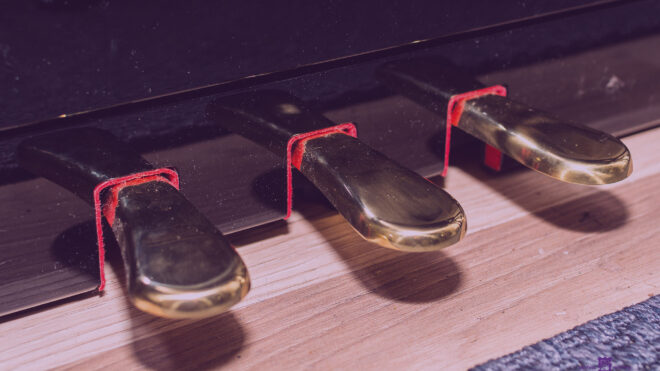
- Dedicated padding for the lid, legs, and pedal assemblies.
- Hoisting equipment when stair and hallway access is limited.
- Specialty dollies for final positioning after reassembly.
How movers handle grands:
- The lid, legs, and pedal assembly are carefully removed and individually wrapped.
- The main body is tilted onto the skid and strapped down firmly.
- Depending on access, the piano is carried, ramped, or hoisted as needed.
- At the destination, movers reassemble the legs and pedals, level the instrument, and position it exactly where the client wants it.
This combination of careful disassembly, protection, and controlled transport helps maintain the piano’s alignment, tone quality, and visual appearance.
Additional Tools That Support the Process
Beyond the core equipment, several smaller tools play supporting roles in a professional piano move:
- Protective floor runners: Prevent scuffs and dirt on hardwood, tile, or carpet.
- Corner bumpers and foam edge guards: Protect doorframes, walls, and banisters.
- Custom storage crates: Essential for long-term storage or long-distance shipments.
- Hand trucks and platform lifts: Assist with moving benches, parts, and smaller components.
While these tools might seem minor, they contribute to the overall smoothness, safety, and professionalism of the move.
The Hidden Benefits of Professional Equipment
Specialized equipment doesn’t just protect the piano — it transforms the entire moving experience for both the movers and the client.
Precision and Control
Professional gear allows movers to guide a piano with remarkable precision, even through tight spaces and awkward angles. This reduces risk, saves time, and prevents the kind of “trial and error” that often leads to damage in DIY moves.
Fewer People, Safer Move
With the right equipment, a smaller, well-trained crew can safely handle extremely heavy instruments. That means less congestion in tight spaces and lower labor costs, while still maintaining exceptional control.
Damage Prevention
Padding, skids, and straps are designed to prevent scratches and dents to the finish, warping or twisting of the frame, and internal misalignment that affects tone and touch. The cost of repairing these types of damage can easily exceed the price of professional piano moving.
Full Insurance Compliance
Professional moving equipment is built to meet safety and insurance standards. This means your move is more likely to be fully covered against unforeseen issues, giving you a layer of protection that DIY efforts simply can’t offer.
Confidence and Peace of Mind
Knowing that your movers are using the right tools — and using them correctly — gives you confidence at every stage of the move. Instead of worrying about every stair or corner, you can focus on the exciting part: seeing your piano safely installed in its new home.
Common Mistakes When Moving Without Proper Equipment
DIY piano moves are risky for a simple reason: most people don’t have access to professional tools or know how to use them effectively.
Frequent mistakes include:
- Using standard furniture dollies that can’t handle the piano’s weight or shape.
- Wrapping the piano with thin blankets or sheets that provide minimal protection.
- Attempting to lift without harnesses, leading to loss of balance and control.
- Sliding the piano directly on hardwood or tile, causing scratches or cracks.
- Ignoring temperature and humidity changes that affect tuning and wood stability.
Even if the piano appears fine on the outside, internal components like the soundboard, bridges, or action mechanism can suffer hidden damage that shows up later as tuning instability or tonal issues.
Why Perfect Moving & Storage is NYC’s Trusted Piano Mover
Perfect Moving & Storage has become New York City’s go-to expert for piano moving by combining advanced equipment with highly trained crews and meticulous planning.
Their approach includes:
- Detailed pre-move inspections and route planning.
- Specialized tools tailored to each piano type and building layout.
- Fully trained, insured crews with deep experience in NYC environments.
- Multi-layer protective wrapping and climate-conscious transport.
- White-glove handling for placement, positioning, and setup at the destination.
With a perfect 5.0-star rating and thousands of successful piano moves, their reputation is built on trust, safety, and consistent results. Every move is treated as a unique project requiring focus, care, and professional-grade tools.
Ready to Move Your Piano Safely?
Every piano has its own story and personality — and it deserves to be handled with care that reflects its value. The difference between a stressful, risky move and a smooth, seamless one comes down to three things: experience, planning, and equipment.
When you choose Perfect Moving & Storage, you’re choosing more than just movers. You’re choosing a team equipped with the right tools, the right training, and the right mindset to move your piano safely and confidently.
Request a quote today and experience the peace of mind that comes with professional-grade piano moving.
Your piano deserves expert hands, specialized tools, and a move that’s truly perfect from start to finish.