Manhattan Apartment Terms: Classic Six, Prewar, Doorman and More
Key takeaways
- Classic six: an apartment with six separate rooms, says Brownstoner.
- Prewar: built before World War II, say Brownstoner and Brick Underground.
- The official category: the city's 2023 survey groups housing units by their building's year built, labeling one "Before 1947".
- A doorman's duties: set by the building's owner or management, says The Cooperator.
- Which rooms count: generally including the kitchen and bedrooms, and excluding the bathrooms, pantries and entrance galleries, says Brick Underground.
Listings in Manhattan use a shorthand of their own, and this page explains the words a mover will ask about, from classic six to prewar and doorman. A classic six is an apartment with six separate rooms, says Brownstoner, in a definition dated July 13, 2016.
If you want the move rather than the vocabulary, the full picture of moving in Manhattan covers the truck rules, the building and the timing.
What Manhattan's apartment words mean
Brownstoner, July 13, 2016, defines a classic six as an apartment with six separate rooms. Brick Underground, February 27, 2020, says prewar is anything built before World War II. The Cooperator, November 2003, says a doorman's duties are up to the owner or management of the building. For the move, tell your mover the floor and how the building is entered.
A classic six, in Brownstoner's and Brick Underground's words
Brownstoner, July 13, 2016, defines a classic six as an apartment with six separate rooms. Brick Underground, December 16, 2025, describes a classic six as a prewar apartment with six rooms, generally including the kitchen and bedrooms, and excluding the bathrooms, pantries and entrance galleries.
Between them, that is a count and a general guide to which rooms it takes in. The second description also places a classic six in a prewar apartment.
So if a listing says classic six and you are counting rooms, the readings above say which rooms the count generally takes in and which it leaves out.
Prewar, and the city's Before 1947 category
Brownstoner, July 13, 2016, defines a prewar apartment as one built before World War II. Brick Underground, February 27, 2020, says prewar is anything built before World War II.
Then there is the city's own survey. The city's 2023 Housing and Vacancy Survey groups housing units by the year their building was built, with a category labeled "Before 1947".
What a doorman does, as the building sets it
The Cooperator, November 2003, says a doorman's duties are up to the owner or management of the building.
So when a listing says doorman, the duties behind the word belong to that building's owner or management. If they matter to you, ask the building, because that is where the answer sits.
What Perfect Moving plans from when a listing gives only a label
Perfect Moving plans from a per-building profile of the specific constraints of that building, the actual entrances, elevator type and dimensions, reservation windows, escalation contacts, and known obstacles, rather than from the building's category label.
So the words are the start of the conversation rather than the end of it.
One line per word, and the page to read next
- Classic six: an apartment with six separate rooms, in Brownstoner's definition of July 13, 2016, and a prewar apartment of six rooms in Brick Underground's of December 16, 2025.
- Prewar: built before World War II, in Brownstoner's words of July 13, 2016 and Brick Underground's of February 27, 2020.
- Before 1947: the city's 2023 Housing and Vacancy Survey's label for one of its year-built groups of housing units.
- Doorman: the duties are the building owner's or management's to set, says The Cooperator, November 2003.
Two of these subjects run further than a definition. What a building itself asks of a move is on moving into a building, and if your building is a co-op or a condo, that difference is on co-ops and condos compared.
I described my apartment in the listing's words, and the estimator asked me to describe the rooms and doorways in my own.
Alexandra N.
They asked about the doorway widths and the hall before they said how the couch would go in.
Chen E.
A large sofa went through narrow rooms, and the crew took care at every turn.
Monique J.
When you move: from the word to the walkthrough
A listing stops at the word. The next step is the building itself, and that is where the questions get specific.
From a job of ours: A listing said classic six, and the customer asked what that told us about their move. We said a label does not tell a mover much. Our office needed the floor, the elevator and what they were bringing.
The word named the apartment, and the planning needed more than the word. For the move itself, from the truck and curb rules to the building and the timing, see the full picture of moving in Manhattan.
Reading a Manhattan listing?
When the listing turns into an address, the next step is the move itself, planned against that building.
Frequently asked questions
What is a classic six?
An apartment with six separate rooms. That is Brownstoner's definition, dated July 13, 2016. Brick Underground, writing on December 16, 2025, describes the same term as a prewar apartment with six rooms, generally counting the kitchen and the bedrooms and leaving out the bathrooms, pantries and entrance galleries. So the term is a room count, and Brick Underground adds which rooms it generally takes in.
What is a prewar apartment?
An apartment built before World War II. That is Brownstoner's definition of July 13, 2016, and Brick Underground, on February 27, 2020, puts it as anything built before World War II.
Does prewar have an official cutoff?
Brownstoner, July 13, 2016, and Brick Underground, February 27, 2020, both define prewar as built before World War II. The city keeps a category of its own: its 2023 Housing and Vacancy Survey groups housing units by the year their building was built and labels one category "Before 1947".
What does a doorman do in a doorman building?
A doorman's duties are up to the owner or management of the building, says The Cooperator, November 2003. So the way to learn what one building's doorman handles is to ask the owner or management of that building.
Do building terms tell me how a move will go?
Not on their own. Perfect Moving plans from a per-building profile of the specific constraints of that building.
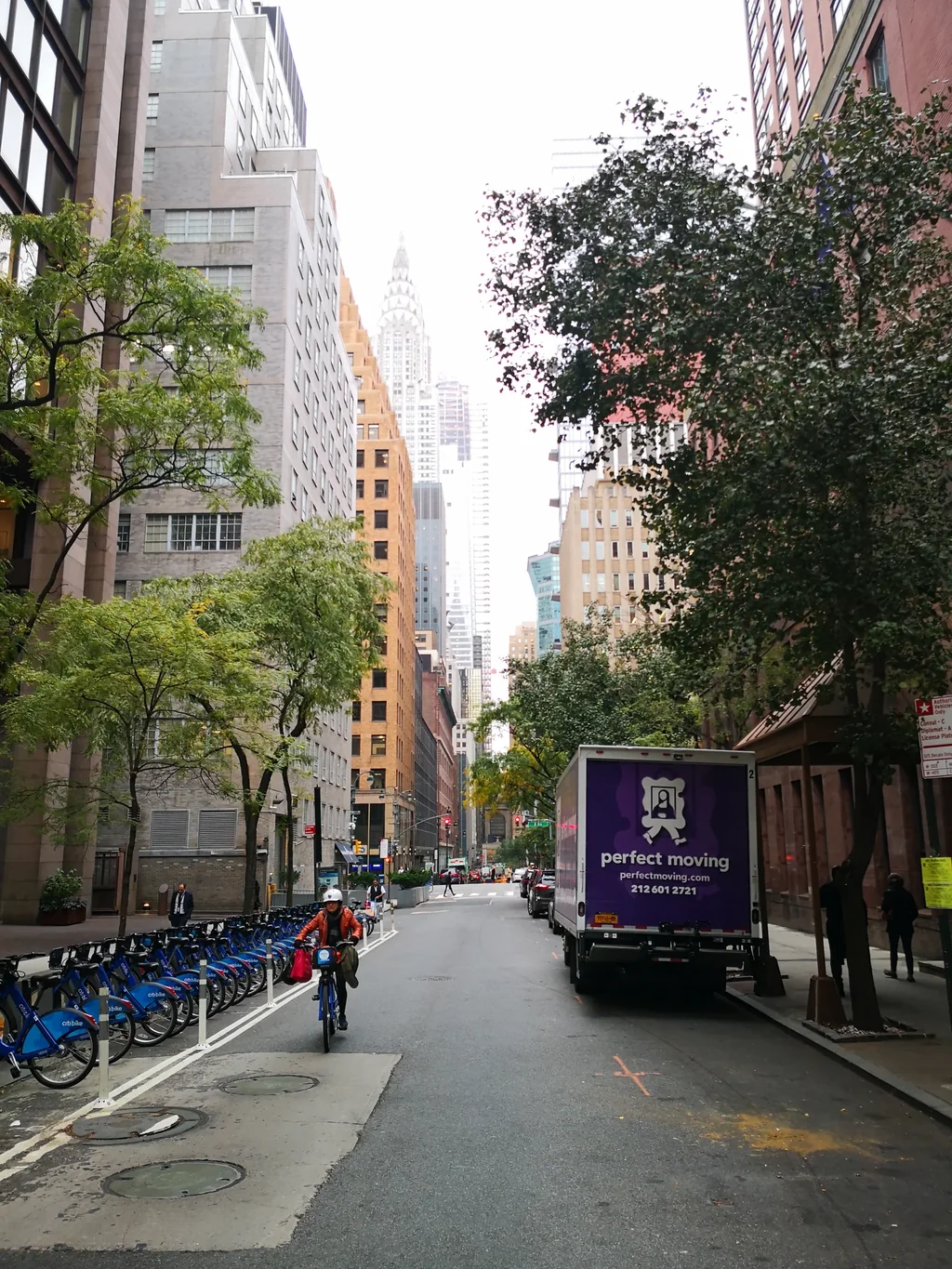



The lines about Perfect Moving and how it works, and the job example, come from the company itself.
- Brownstoner, classic six: dated July 13, 2016, read November 1, 2026.
- Brick Underground, classic six: dated December 16, 2025, read November 1, 2026.
- Brownstoner, prewar apartment: dated July 13, 2016, read November 1, 2026.
- Brick Underground, prewar, postwar or new construction: dated February 27, 2020, read November 1, 2026.
- NYC HPD, 2023 New York City Housing and Vacancy Survey, selected initial findings: 2023 survey, read November 1, 2026.
- The Cooperator, A Spotlight on Your Doorman: article dated November 2003, read November 1, 2026.
William Wright, Author. William Wright is a copywriter with more than seven years writing for moving and storage companies and other local service businesses. He focuses on clear, practical guides that help people plan a move and choose a service with confidence, from neighborhood logistics to relocation planning.
Eddie Torr, Editor. Eddie Torr is an AI content editor who acts as the independent check on quality and compliance, and no draft advances until it clears him. He ties each claim back to its approved source, holds the piece to the editorial standards, and returns a ranked verdict. He does not rewrite the copy and does not approve publishing; a human reviewer makes that call.
Reed Marks, Reviewer. Reed Marks is a senior editor. Over nine years he has worked in copy editing, content review, fact-checking, and editorial QA in many different fields, and his degrees are in Journalism (bachelor's) and Professional Writing (master's). He gives each piece its final human read before it publishes: he checks that the claims stand, that the cited sources actually back them, and that the writing is clean and on-brand for search.
Reviewed on this post: Reed Marks's review covers the four publications this page cites and the date given beside each definition. It also covers the one statement about how a move is planned, which names Perfect Moving as its subject, and the city's Before 1947 category, given as the city's own label for one of its year-built groups of housing units.
The whole move
- The full picture of moving in Manhattan: the truck and curb rules, the building, the timing, and a plan to follow from the start.
What the building asks, and what it is
- Moving into a building: what a building asks of a move, and the paperwork and bookings that come with it.
- Co-ops and condos compared: what each form of ownership is, and who runs a co-op.