Moving to Manhattan: The Complete Guide
Key takeaways
- Check the routes. The city's truck rule took effect October 4, 2026.
- Midtown has its own rule. So do the 14th Street blocks between Third and Ninth Avenues.
- Ask about the elevator. In 2023, 77 percent of Manhattan's housing units had an elevator.
- Book as far ahead as you can. If the move is urgent, book as soon as possible.
- The quote is free and in writing. Perfect Moving provides it before move day.
This guide is for a move into Manhattan, a move out of it, a move from one Manhattan address to another, and an office move inside the island. Some readers are ready to book. Others are still working out which part of Manhattan they can live in. Either way, what follows is the move itself.
If the building is your first question, open what a Manhattan building asks of a move.
The building, the street and the calendar
A Manhattan move turns on three things: the building you are entering or leaving, the street outside it, and the calendar you book it on. In the building, ask about the elevator: in 2023, 77 percent of Manhattan's housing units had an elevator, in NYC HPD's 2023 Housing and Vacancy Survey.
On the street, the city's truck rule took effect October 4, 2026, and Midtown and the 14th Street blocks between Third and Ninth Avenues have rules of their own. On the calendar, book as far ahead as you can. Tell your mover both addresses when you book.
The city's truck rule in Manhattan, and the roads a truck may not use
The city's truck rule decides which roads a truck may use to reach a Manhattan address, and the rule took effect October 4, 2026. Under that rule, a truck with no origin or destination in Manhattan stays on Through routes. A truck with an origin or destination in Manhattan for delivery, loading or servicing stays on Through and Local routes, and leaves them at the nearest intersection by the most direct route.
Two city pages define a truck differently. The truck route rule defines a truck as a vehicle designed to carry property that has two axles and six tires, or three or more axles. The 14th Street Busway page says any vehicle designed to transport property that has more than two axles or six or more tires.
On Manhattan truck routes, the city's truck rule says all trucks must follow posted signs that limit vehicle height. The MTA lists the height limit at the Queens Midtown Tunnel as 12 feet 1 inch. For the Robert F. Kennedy Bridge's Harlem River lift span, it lists 12 feet 11 inches from Manhattan and 14 feet to Manhattan. It prohibits hazardous materials at the Queens Midtown and Hugh L. Carey tunnels.
One more list matters before a route is set. NYC DOT's list of roadways where commercial vehicles are not permitted includes the FDR Drive and the Henry Hudson Parkway.
One part of the record needs careful reading. NYC DOT's adopted notice for the 2026 truck rule shows the limited truck zones paragraph as deleted material, and that paragraph named Chelsea, Chinatown, Greenwich Village, Little Italy and the Lower East Side. DOT's 2025 redesign report says these zones are proposed to be removed. That is what the notice and the report say, which is not the same as a reading of the code in force on your move date.
None of these records names your own block. They speak in route categories and named roads, so for a specific street, ask your mover.
In Midtown and on 14th Street, the rules change
Midtown has its own rule. NYC Finance lists a violation for double parking any type of vehicle in Midtown Manhattan, 14th Street to 60th Street, First Avenue to Twelfth Avenue, from 7:00 a.m. to 7:00 p.m. every day except Sunday.
One street at that box's edge has rules of its own again. NYC DOT's 14th Street Busway page says that on 14th Street between Third and Ninth Avenues, only buses, trucks and emergency vehicles may travel along the street, from 6 a.m. to 10 p.m. every day. Other vehicles may make local trips and must take the next available right turn. Vehicles may not turn left off 14th Street, except MTA buses at signed locations, and automated cameras enforce the rules.
If either of your addresses sits inside the Midtown box, or on those blocks of 14th Street, say so when you book.
Here, too, the record stops short of an address. The violation names a box of streets and a span of hours, not buildings, so your own corner is a question for the mover planning the day.
Whether the Congestion Relief Zone reaches your address
The Congestion Relief Zone has a boundary, and the MTA states it. The MTA says the zone includes the local streets and avenues of Manhattan south of and including 60 Street.
For anything else about the zone, the MTA's Congestion Relief Zone page is the source, and it is linked in Sources below.
At the curb, the sign and the block decide
Outside the building, what a truck may do at the curb depends on the sign, the hour and the block.
The city's curb rules speak of packages, merchandise, pickups, deliveries and service calls, and they do not say whether a household move counts.
So read the sign at both addresses yourself, well before move day, and tell your mover what it says.
Inside the building: the elevator, the flights and the paperwork
In 2023, 77 percent of Manhattan's housing units (712,000) had an elevator, and 158,800 units required climbing one or more flights, in NYC HPD's 2023 Housing and Vacancy Survey. That counts units, not walk-up buildings.
The street rules above stop at the entrance. Two official records describe the housing behind it, and they count different things. The city's tax lot file counts lots rather than homes. For Manhattan it gives these figures:
- Two-unit house lots: 1,867
- Walk-up apartment lots: 15,432
- Elevator apartment lots: 6,072
These are tax lots, not buildings.
What a building asks of a move is a different record. Brick Underground, in 2017, and The Cooperator, in 1997, both say buildings often restrict moves to set hours. Brick Underground also tells renters to find out about any required advance scheduling, any fees, and whether they will share the elevator.
The same housing survey also groups housing units by the year their building was built, with a category labeled "Before 1947". The words a Manhattan listing uses are explained on their own page: Manhattan apartment terms, from classic six to doorman. If your building is a co-op or a condo, the difference is on another: co-op vs. condo in Manhattan.
Neither record describes your own building. The elevator you will actually use, the hours it is available and the paperwork behind it come from management, and the depth is on its own page: what a Manhattan building asks of a move.
On the calendar: booking, and what the written quote covers
Book as far ahead as you can, and if the move is urgent, book as soon as possible. That is advice, not a lead time, and not a promise that a particular date is open.
At Perfect Moving, every move receives a clear written quote before move day, stating the addresses, the inventory and the access plan. The quote is free.
Perfect Moving gives a confirmed arrival window, not an exact arrival time, and there is a dedicated foreman on every move.
If the question behind your move is what Manhattan costs, the sourced public figures sit on their own page: the cost of living in Manhattan.
What Perfect Moving settles before move day
Before move day, Perfect Moving reconciles the building's separate move requirements into one executable sequence: management approval, the certificate of insurance, the elevator or freight reservation, loading-dock or curb access, and permitted hours. We confirm they fit together into a single path a person can actually follow, rather than a pile of separate requirements each owned by a different department. Certificate of insurance and building coordination is an add-on for an additional fee.
Every access dependency on a job plan carries a status. Anything still assumed the day before a move is kept labeled assumed out loud, to the customer and the crew leader.
The plan is walked end-to-end with the person who will run it, in the sequence the day will take. Anything that person cannot account for is treated as not-ready and settled by phone before the day, not on the morning it has to work.
Perfect Moving treats local expertise as verified, block-level operating facts that change the work, stated with where the evidence ends, rather than as a neighborhood name on a page. Those facts are things like a specific street's loading and parking realities, or a specific building's dock hours and reservation process.
Perfect Moving is a full-service NYC-metro mover: local and long-distance, residential and commercial, packing, storage, and specialty-item moving. Perfect Moving works across greater NYC and the tri-state area, and runs long-distance moves from NYC or New Jersey to anywhere in the US. It is fully licensed and insured, with additional insurance available via a third-party provider, and it is a licensed mover: USDOT 3222129, MC 1011174, NYSDOT 40614. The two federal numbers can be looked up through FMCSA. Perfect Moving has multiple NYC-metro locations: Lower Manhattan, two Long Island City warehouses, the Bronx, Flushing, and North Bergen NJ.
Before anything was loaded, the crew walked me through the building, the street and the date, so I knew the order of the day.
Layla P.
I called with a long list of questions about my move and got a plain answer to each one.
Christopher F.
The plan I got was short and in order, and I could follow it from the first call to the last box.
Simone V.
A short plan in order
Here is the same ground as a list you can work through yourself, in the order a reader would take it.
- Choose the move day. Use the booking advice in the calendar section above.
- Ask for the written quote. The calendar section above says what it states and when it comes.
- Ask the building its own questions. Ask about its hours, scheduling, fees and the elevator, the points in the building section above, and get your building's answers in writing.
- Name both streets when you book. Say if either address is in Midtown or on 14th Street between Third and Ninth Avenues, because those blocks have rules of their own. The roads in are set by the city's truck rule.
- Read the zone boundary. The Congestion Relief Zone includes the local streets and avenues of Manhattan south of and including 60 Street, and the MTA's page is the source.
- Ask what is still open. Ask which items on the job plan are still marked assumed, the status point in the section on what Perfect Moving settles before move day.
Here is item 6 on one of our own jobs. The day before one move into a Manhattan doorman building, management still had not said our certificate of insurance was accepted. That item stayed open on the job plan, the customer knew it, and our office called the building that afternoon to close it.
What a building asks of a move, in full, is on its own page: what a Manhattan building asks of a move. For an office, the page to open is how Manhattan office moves work. If you are still deciding where in Manhattan to land, read how Manhattan neighborhoods compare for a move. The full list of pages is below.
Get the access plan on your Manhattan quote
The written quote comes before move day, free, with the addresses, the inventory and the access plan on it.
Frequently asked questions
Can a moving truck stop on a Manhattan street?
It depends on the block. NYC Finance lists double parking as a violation in Midtown, 14th to 60th Street, First to Twelfth Avenue, 7:00 a.m. to 7:00 p.m. daily except Sunday. NYC DOT says only buses, trucks and emergency vehicles may travel along 14th Street between Third and Ninth Avenues, 6 a.m. to 10 p.m. daily. The city's truck rule decides the route in. Citywide, the sign, the hour and the block decide. The rules do not say whether a household move counts.
How far ahead should I book in Manhattan?
Book as far ahead as you can, and if the move is urgent, book as soon as possible. Treat that as advice: it is not a lead time, and not a promise that a particular date is free.
Which streets can a moving truck use in Manhattan?
Under the city's truck rule, which took effect October 4, 2026, a truck with no Manhattan origin or destination stays on Through routes. A truck with an origin or destination in Manhattan for delivery, loading or servicing stays on Through and Local routes, leaving them at the nearest intersection by the most direct route. On those routes, all trucks must follow posted signs that limit vehicle height. NYC DOT's list of roadways where commercial vehicles are not permitted includes the FDR Drive and the Henry Hudson Parkway. For a specific street, ask your mover.
Do Midtown streets have their own rules for loading?
Yes. Midtown has its own rule. NYC Finance lists a violation for double parking any type of vehicle in Midtown Manhattan, 14th Street to 60th Street, First Avenue to Twelfth Avenue, from 7:00 a.m. to 7:00 p.m. every day except Sunday. NYC DOT's 14th Street Busway page says that on 14th Street between Third and Ninth Avenues, only buses, trucks and emergency vehicles may travel along the street, 6 a.m. to 10 p.m. daily.
Does the Congestion Relief Zone cover my address?
The MTA says the Congestion Relief Zone includes the local streets and avenues of Manhattan south of and including 60 Street. For anything else about the zone, the MTA's page is the source, linked in Sources.
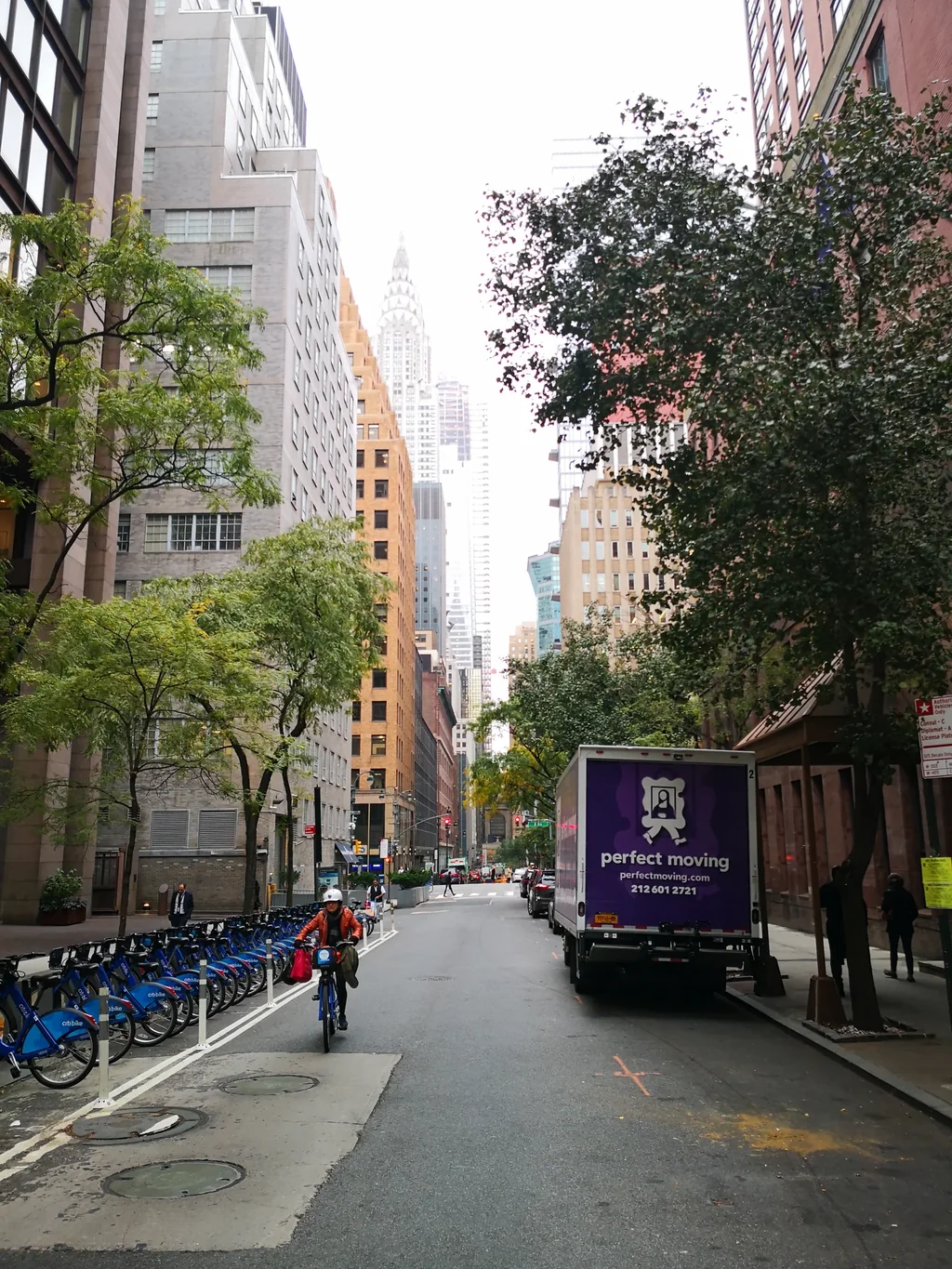
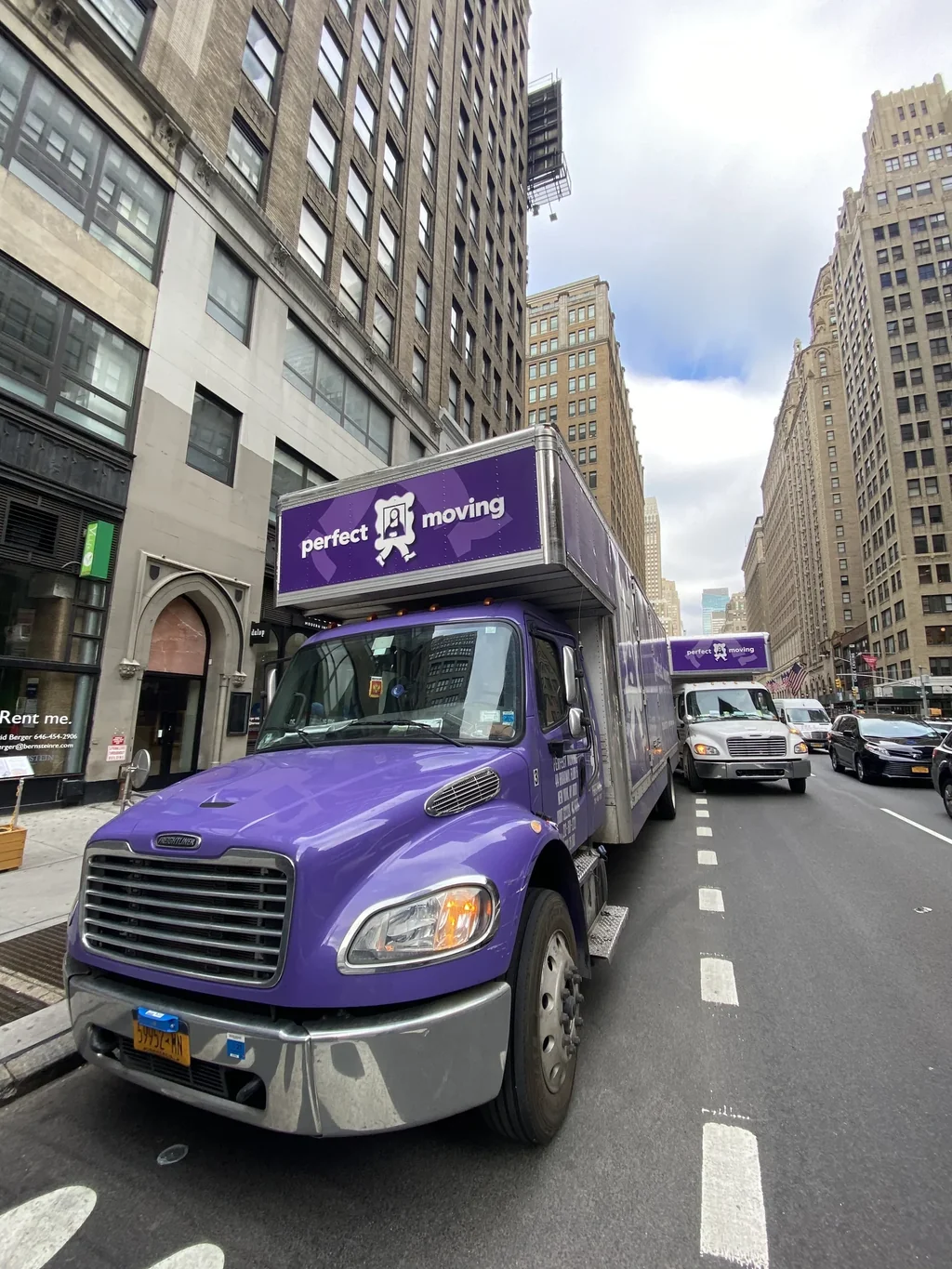
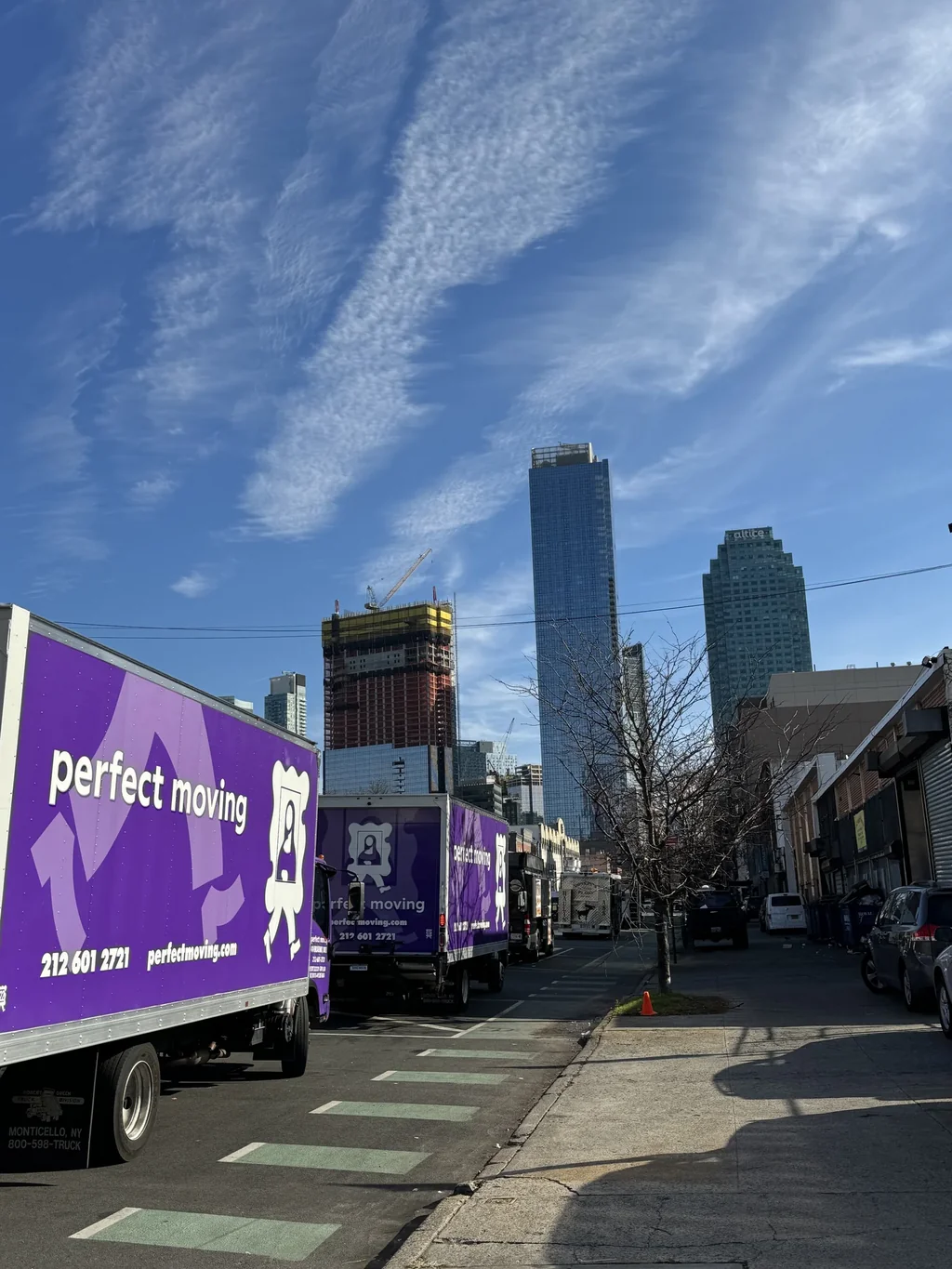
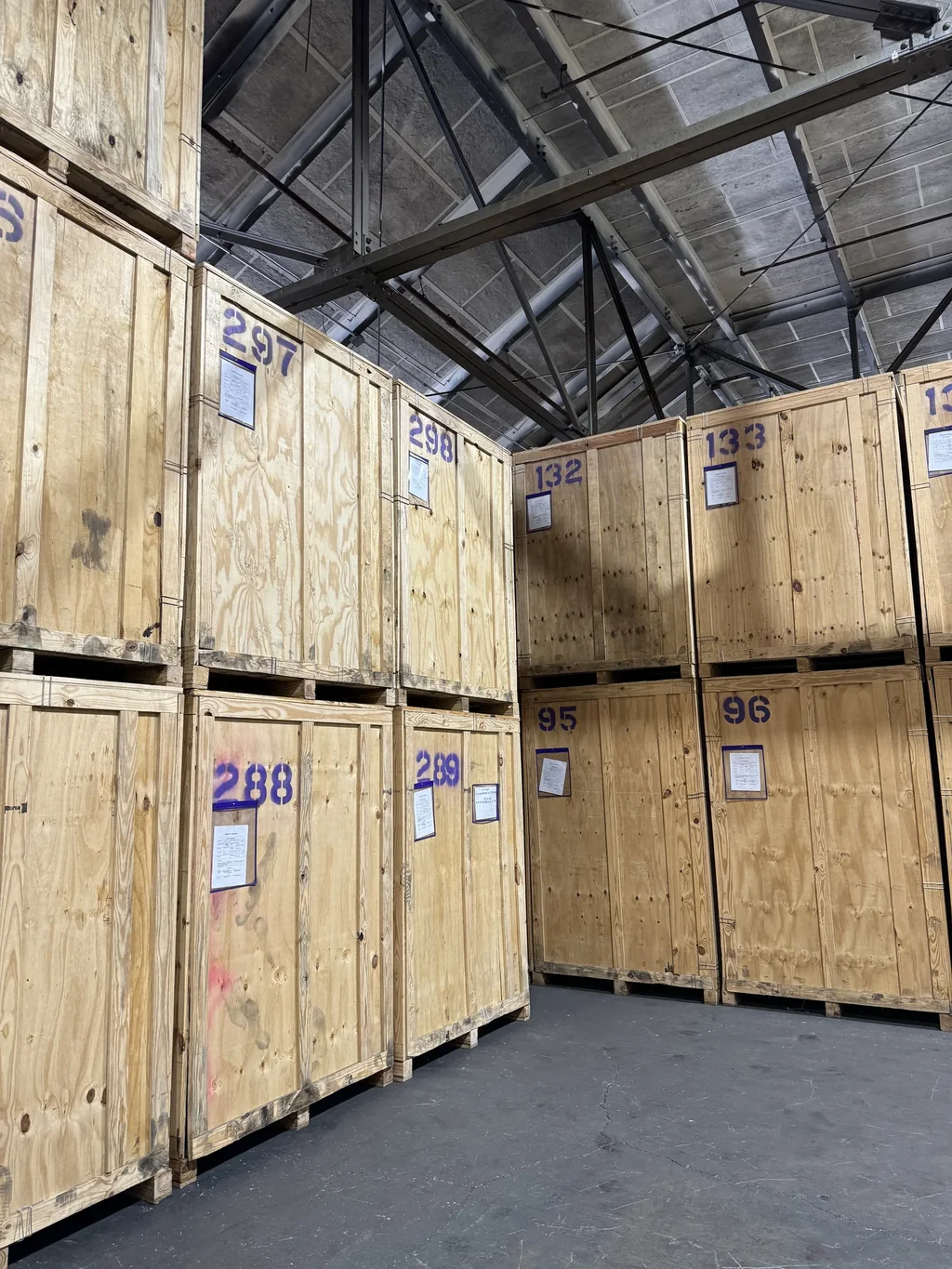
The lines about Perfect Moving and how it works, and the job example, come from the company itself.
The sources below, in the order the guide uses them. Each one names its own date, where it has one, and the date it was read.
- Notice of Adoption for 34 RCNY 4-13: Through and Local routes, the height-sign rule, and the deleted limited truck zones paragraph; read October 31, 2026.
- City traffic rules, 34 RCNY, sections 4-13 and 4-14: the truck route rule's own definition of a truck, and the rule's October 4, 2026 effective date; read October 31, 2026.
- NYC DOT, 14th Street Busway: the Busway page's different definition of a truck, and the 14th Street travel, turn and camera rules; read November 1, 2026.
- MTA, truck information: the crossing heights and the hazardous-materials rule; read October 31, 2026.
- NYC DOT, parkways: the roadways where commercial vehicles are not permitted; read October 31, 2026.
- NYC DOT, truck network redesign report: the 2025 report on the limited truck zones; read November 1, 2026.
- NYC Department of Finance, violation codes: the Midtown double-parking violation, its box and its hours; read October 31, 2026.
- MTA, Congestion Relief Zone: the zone boundary; read November 1, 2026.
- City traffic rules, 34 RCNY 4-08: the commercial-vehicle parking limits and the standing allowance behind the curb summary; read October 31, 2026.
- NYC DOT, truck FAQ: the same parking limits in plain terms; read October 31, 2026.
- NYC DOT, parking sign legend: what the No Parking, No Standing and No Stopping signs say about loading; read October 31, 2026.
- NYC HPD, 2023 New York City Housing and Vacancy Survey, selected initial findings: the elevator and climb figures, and the Before 1947 category; 2023 survey, read November 1, 2026.
- NYC PLUTO tax lot file: PLUTO 26v2, August 2026, read October 31, 2026; what this page draws from it is our own calculation.
- Brick Underground, guide to elevators in NYC apartments: set hours, and what it tells renters to find out about, namely advance scheduling, fees and sharing the elevator; article dated May 4, 2017, read November 1, 2026.
- The Cooperator, Relocation and the Board: set hours, in an older source; article dated March 1997, read November 1, 2026.
City rules, signs and crossing limits change, and the city's truck rule carries an effective date of October 4, 2026. The rule in force on your move date is the one that governs.
William Wright, Author. William Wright is a copywriter with more than seven years writing for moving and storage companies and other local service businesses. He focuses on clear, practical guides that help people plan a move and choose a service with confidence, from neighborhood logistics to relocation planning.
Eddie Torr, Editor. Eddie Torr is an AI content editor who acts as the independent check on quality and compliance, and no draft advances until it clears him. He ties each claim back to its approved source, holds the piece to the editorial standards, and returns a ranked verdict. He does not rewrite the copy and does not approve publishing; a human reviewer makes that call.
Reed Marks, Reviewer. Reed Marks is a senior editor. Over nine years he has worked in copy editing, content review, fact-checking, and editorial QA in many different fields, and his degrees are in Journalism (bachelor's) and Professional Writing (master's). He gives each piece its final human read before it publishes: he checks that the claims stand, that the cited sources actually back them, and that the writing is clean and on-brand for search.
Reviewed on this post: Reed Marks's review covers each Manhattan rule here with the limit its own source states, and the two city definitions of a truck, each attributed to its own page. It also covers the Midtown rule and the citywide curb rules, kept apart, the absence of any toll amount or crossing weight, the elevator figure as housing units and the lot counts as tax lots, and the plain statement that the citywide curb rules do not say whether a household move counts.
From building rules to rent, each page below takes one Manhattan question further and links back to this guide. The area pages cover housing stock, transit and what a move involves, and they rank nothing.
Moves and ownership
- How Manhattan office moves work: the tower's hours, the loading dock and elevator time, and the paperwork an office move needs.
- What a Manhattan building asks of a move: service entrances, freight elevator reservations and what to ask the managing agent first.
- Co-op vs. condo in Manhattan: what each form of ownership is, and who runs a co-op.
- Manhattan apartment terms, from classic six to doorman: the words a listing uses, each with its source and date, and what Perfect Moving plans from instead of the label.
Living in Manhattan: deciding where
- How Manhattan neighborhoods compare for a move: how to compare parts of the island on things you can check for yourself.
- The cost of living in Manhattan: the cost figures, each with its source and what it covers.
- How to read Manhattan's official safety data: what the published numbers count, and what they cannot tell you.
- Manhattan's neighborhoods, by NYC Planning's names: the community district count, NYC Planning's 38 areas with their codes, and where the map shapes are published.
- Rent by neighborhood in Manhattan: area rent figures with the margin the source gives, in alphabetical order.
- Manhattan ZIP codes by neighborhood: NYC Health's list of ZCTAs by area, and what USPS says about a complete address.
A page for each area
- Movers on the Upper East Side: the public records for these blocks, and the lines to send your mover.
- Movers on the Upper West Side: what the records say about these streets, and what to settle before the truck is booked.
- Movers in Harlem: which district a block sits in, and what that means for the move.
- Movers in Washington Heights: the park, the tunnel and the station records, and what to tell a mover about a steep block.
- Movers in Greenwich Village and the West Village: LPC's district list, Weehawken Street and two station names, each with its source.
- Movers in Morningside Heights: the district and the park edge in LPC's records, with route notes for your mover.
- Movers on the Lower East Side and in the East Village: the avenue letters that belong in an address, and the records behind them.
- Movers in Tribeca and SoHo: the historic districts, and the Holland Tunnel limits as the Port Authority lists them.
- Movers in the Financial District and Battery Park City: the street plan and the site records for Lower Manhattan.
- Movers in Murray Hill, Gramercy and Kips Bay: how the three names sit in the city's records, and what LPC's reports say there.
- Moving to Roosevelt Island: the island's road bridge, who manages the roads, and what to confirm by phone.