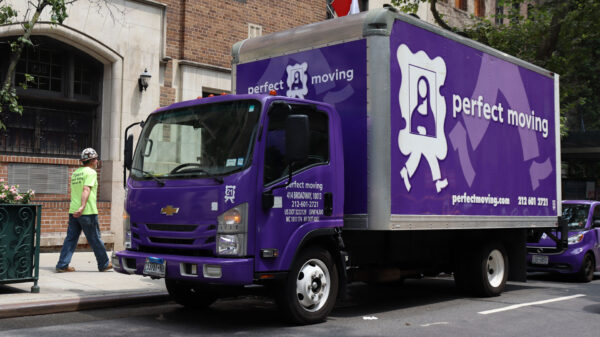

Office and Commercial Moves in Manhattan
Key takeaways
- The hours are the building's. A tenant move typically runs after business hours.
- The freight elevator is a reservation with building management, and passenger elevators are not used.
- The certificate wording is each building's own. The certificate comes from the moving company.
- Perfect Moving's certificate is usually issued quickly, usually within an hour.
- The elevator timing is the building's too. Lead time and block length are each building's own.
Your office is moving, and the first question is not which mover to call. It is who gets to say when the move happens at all.
In a Manhattan tower, two parties answer that, and you are neither of them. One is the building. When may a tenant move? Who holds the freight elevator reservation, and for how long? What does the building want in writing from your moving company? The other is the city, which decides what a truck may do at the curb outside the door.
Our complete guide to moving to Manhattan covers the whole move, from the truck routes to the calendar. What follows is the office version.
How to move an office in a Manhattan tower
Off The MRKT (July 28, 2026) and move rules published by two Manhattan office buildings, one from 2017, say a tenant move typically runs after business hours and goes through the freight elevator by reservation. The same sources say the move needs the moving company's certificate of insurance. Ask building management for all three in writing before you book.
The move hours belong to the building
Off The MRKT and two buildings' published move rules say Manhattan office buildings typically require a tenant move to run after business hours, on weekday evenings, weekends or holidays. Each building sets its own hours.
After business hours is a pattern across buildings, not your own tower's answer.
Ask building management for the hours, in writing. Off-hours or rush work is one of Perfect Moving's additional services, an add-on for an additional fee.
The freight elevator is booked with building management
Off The MRKT and two buildings' published move rules say office moves go through the freight elevator by reservation with building management, and that passenger elevators are not used for moving. Lead time and block length are each building's own.
Before move day, Perfect Moving reconciles the building's separate move requirements into one executable sequence: management approval, certificate of insurance, elevator or freight reservation, loading-dock or curb access and permitted hours. Perfect Moving confirms they fit together into a single path a person can actually follow.
Which your tower uses, a dock or a stretch of curb, is a question for building management.
The certificate comes from the mover
Off The MRKT and two buildings' published move rules say building management requires a certificate of insurance from the moving company before an office move begins. Each building sets its own wording for who is named on it.
Under New York law, a certificate of insurance is evidence of coverage, not a policy or a binder. It cannot change, extend or alter the policy.
Ask building management for the exact wording it wants, in writing, and send that to your mover. At Perfect Moving, a certificate of insurance is usually issued quickly, usually within an hour. Perfect Moving is fully licensed and insured, with additional insurance available via a third-party provider. Certificate and building coordination is one of Perfect Moving's additional services, an add-on for an additional fee.
Moving into a Manhattan home instead? What a building asks of a move covers that side.
What the city allows at the curb outside your tower
City traffic rules, not the building, govern the curb outside a Manhattan tower. The NYC Department of Transportation (NYC DOT) sign legend says that at a No Parking sign you may stop to load or unload packages or merchandise at the curb. The legend does not mention household moves. The city's rule on standing beside a parked vehicle speaks of pickups, deliveries and service calls, and it does not say whether a household move counts.
Midtown has its own rule. NYC Finance lists a violation for double parking any type of vehicle in Midtown Manhattan, 14th Street to 60th Street, First Avenue to Twelfth Avenue, from 7:00 a.m. to 7:00 p.m. every day except Sunday.
Read the signs on your tower's block, and the hours on them, before move day. The truck routes, the crossings and the rest of the curb rules are in our complete guide to moving to Manhattan.
Inside the company: the order things come back in
Perfect Moving plans a commercial move as a sequenced transition of operations, people, systems, custody and vendors, reconnecting in the order the business needs.
In a tower, that order has to fit the hours the building permits and the freight elevator block it reserves. So tell us which desks, phones and files need to come back up first.
Sensitive files, and when an office move needs commercial movers
Before a commercial move with Perfect Moving, each sensitive asset has a defined description of what it contains, who may handle it, and what happens when authorization is unclear, so custody is a named chain, not an assumption.
Write that chain down before an evening move, when the people who hold the answers may have gone home. The locked drawer of signed originals, the payroll file, the machine the client list lives on: each needs a named handler and a backup. Crating is one of Perfect Moving's additional services, an add-on for an additional fee.
Once each item has its handler, the physical half of the move, the packing, the crating and the carrying, is the movers' job. Perfect Moving is a full-service NYC-metro mover: local and long-distance, residential and commercial, packing, storage, and specialty-item moving. Perfect Moving puts a dedicated foreman on every move, and gives a confirmed arrival window rather than an exact arrival time.
They asked for the building's dock and elevator rules up front and planned our office move around them.
Rebecca E.
Everyone on our team knew who was in charge of what, and the foreman checked in with our office manager at each step.
Faisal J.
They stayed in touch with the building management on our behalf, and I did not have to relay a message twice.
Naomi O.
Questions to put to building management before you book
Each answer is your building's to give, so ask in writing before you book a date.
- Which hours does the building permit a move to run in?
- How long is the freight elevator block, and which slots are open?
- Is it a loading dock or the curb, and which entrance?
- What exact wording does the certificate need?
- Who from your company has to be on site?
One job of ours: A small company moving between two Manhattan towers had a different loading dock and elevator booking at each end. Each tower also wanted its own paperwork, so one contact at the company and one at our office went through both lists side by side. The crew's times for each tower came from that.
When does your tower allow an office move?
Settle the building's answers first, then the date.
Frequently asked questions
How does a tower's loading dock and elevator time shape an office move?
Both are the building's. Off The MRKT and two buildings' published move rules say office moves go through the freight elevator by reservation with building management. Lead time and block length are each building's own. The same sources say a tenant move typically runs after business hours. Ask building management which dock or curb access your tower has, which elevator slots exist, and for which hours.
When do Manhattan office buildings let tenants move?
Your building decides, and each building sets its own hours. Ask building management which hours it permits, in writing. Off The MRKT and two buildings' published move rules say Manhattan office buildings typically require a tenant move to run after business hours, on weekday evenings, weekends or holidays. The section on the move hours above covers off-hours and rush work.
Who is named on a tower's certificate of insurance?
The record does not settle it. Off The MRKT and two buildings' published move rules say building management requires a certificate of insurance from the moving company before an office move begins. Each building sets its own wording for who is named on it. Under New York law, a certificate of insurance is evidence of coverage, not a policy or a binder. Ask building management for its exact wording in writing.
Can an office move use the passenger elevators?
No. Off The MRKT and two buildings' published move rules say passenger elevators are not used for moving, and that office moves go through the freight elevator by reservation with building management. Lead time and block length are each building's own, so ask building management what your tower's reservation looks like.
How should sensitive files and equipment move out of a Manhattan office?
Start with the list, then the names. The section on sensitive files above covers what the list holds and who may handle each item. On an evening move the people who hold those answers have gone home, so name a second person who may decide.
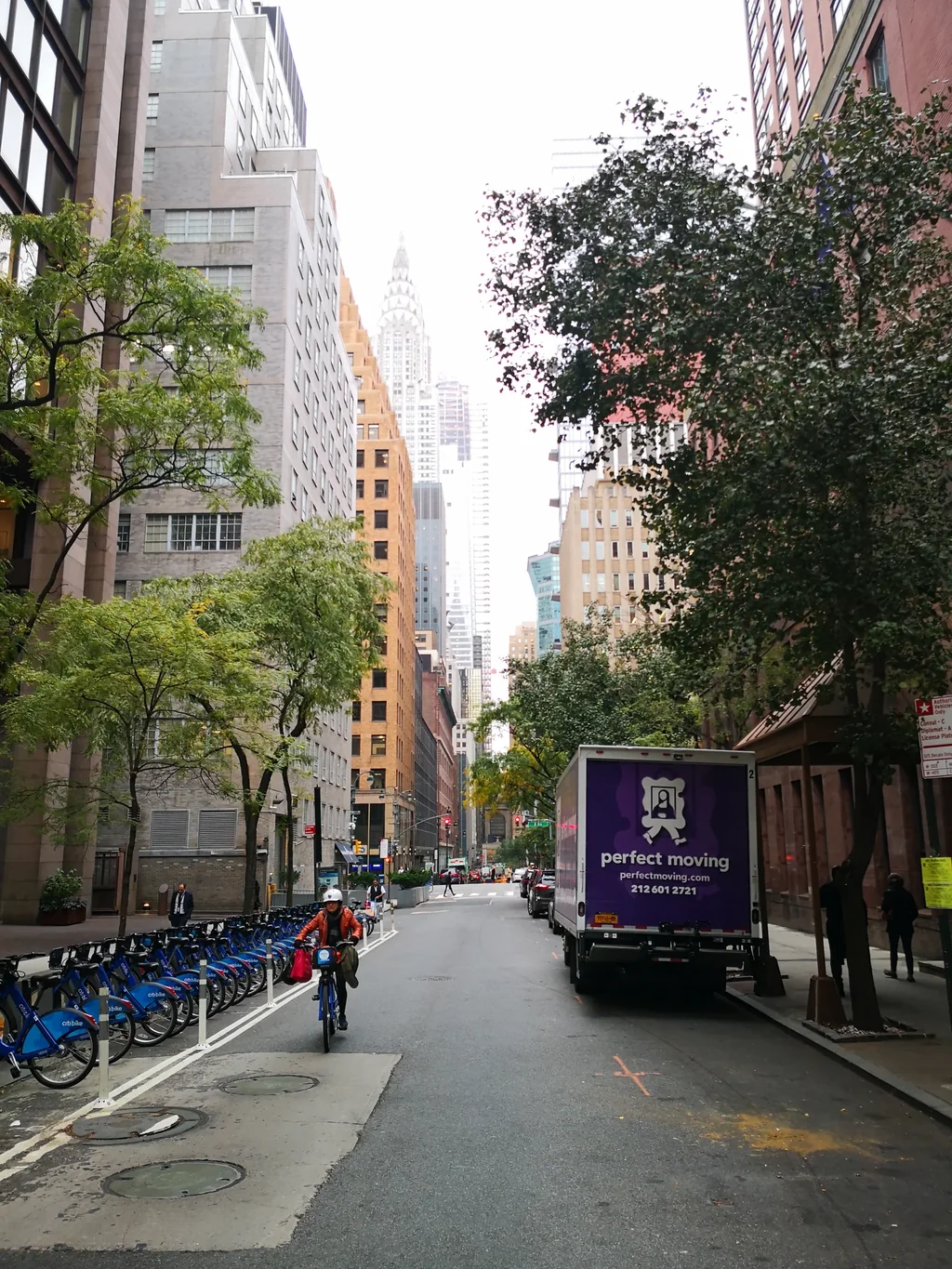
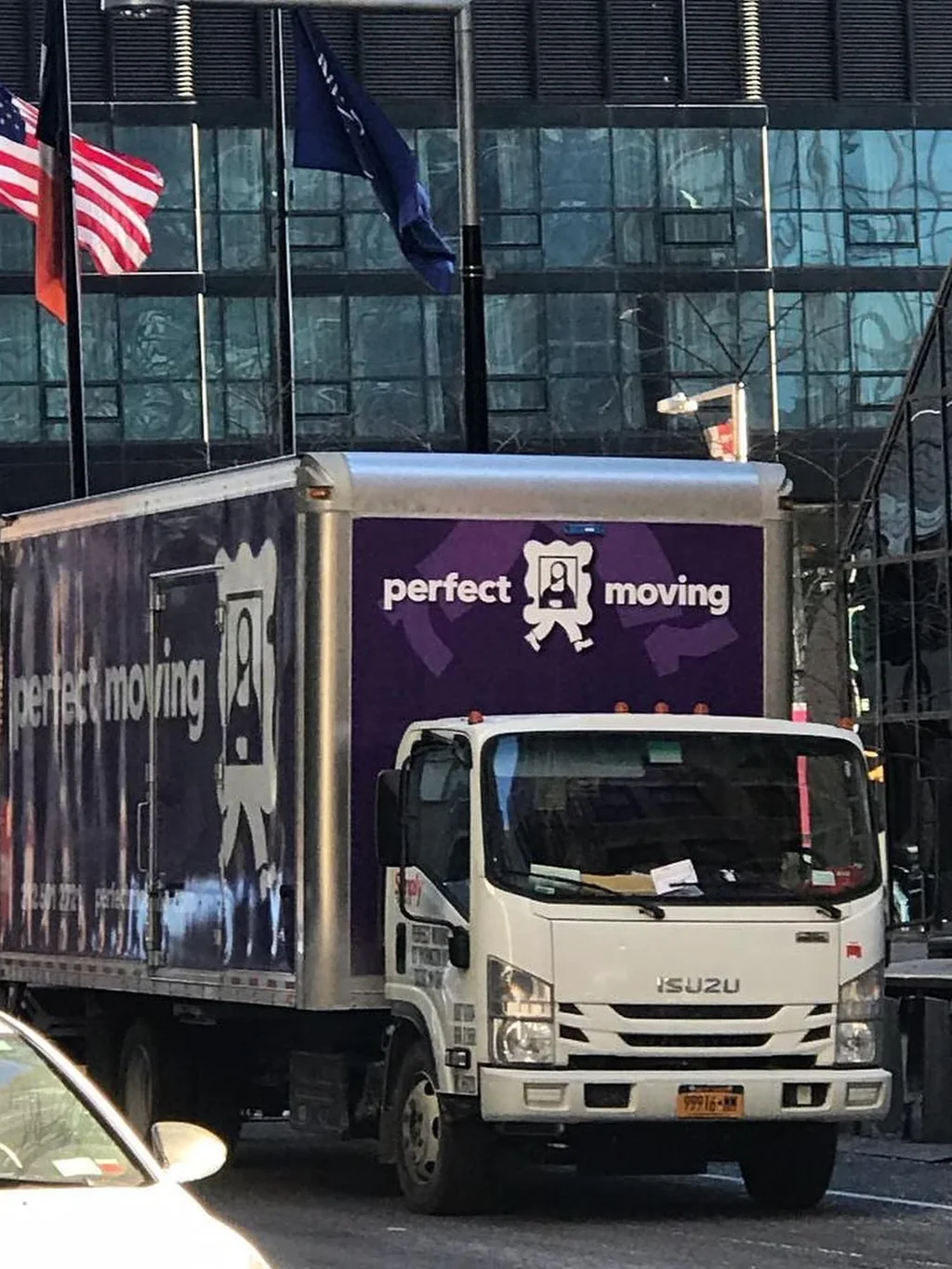
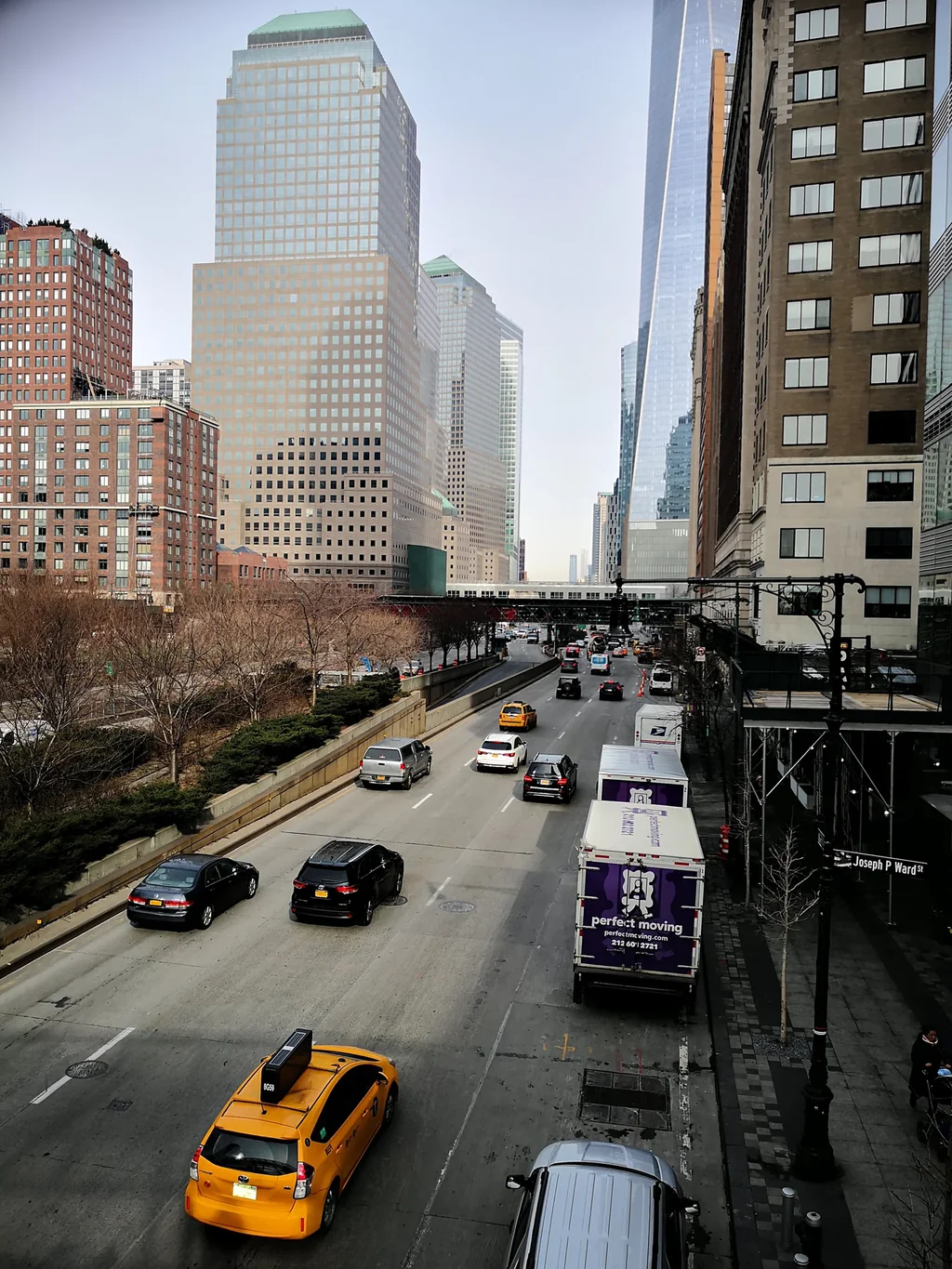



The lines about Perfect Moving and how it works, and the job example, come from the company itself.
- Off The MRKT: the after-hours pattern, the freight elevator reservation and the certificate requirement; dated July 28, 2026, read November 1, 2026.
- Move rules published by two Manhattan office buildings: the same three requirements in two buildings' own documents, one dated May 2017 and one with no printed date. Neither building is named or linked.
- New York Insurance Law 501: a certificate of insurance as evidence of coverage; read October 31, 2026.
- New York Insurance Law 502: that a certificate cannot change, extend or alter the policy; revision shown July 31, 2015, read October 31, 2026.
- City traffic rules, 34 RCNY 4-08: the rule on standing beside a parked vehicle, and Midtown's own rule; read October 31, 2026.
- NYC Department of Finance, violation codes: the Midtown double-parking violation, its box and its hours; read November 1, 2026.
- NYC DOT, parking sign legend: what the No Parking sign says about loading; read October 31, 2026.
City rules and signs change, and the rule in force on your move date is the one that governs.
William Wright, Author. William Wright is a copywriter with more than seven years writing for moving and storage companies and other local service businesses. He focuses on clear, practical guides that help people plan a move and choose a service with confidence, from neighborhood logistics to relocation planning.
Eddie Torr, Editor. Eddie Torr is an AI content editor who acts as the independent check on quality and compliance, and no draft advances until it clears him. He ties each claim back to its approved source, holds the piece to the editorial standards, and returns a ranked verdict. He does not rewrite the copy and does not approve publishing; a human reviewer makes that call.
Reed Marks, Reviewer. Reed Marks is a senior editor. Over nine years he has worked in copy editing, content review, fact-checking, and editorial QA in many different fields, and his degrees are in Journalism (bachelor's) and Professional Writing (master's). He gives each piece its final human read before it publishes: he checks that the claims stand, that the cited sources actually back them, and that the writing is clean and on-brand for search.
Reviewed on this post: Reed Marks's review covers this page and the sources it cites: the hours, the freight elevator and the certificate wording, each stated as the building's own. It also covers the absence of any building's dock rule, lead time, named party or coverage limit.
- Our complete guide to moving to Manhattan: the truck routes and the Midtown streets, the curb in short, the building, the timing, and a plan to follow from the start.
- What a building asks of a move: what a Manhattan building asks of a resident and a mover, and the question to put in writing for each.